Monday, 11 May 2026

Getting Started with AIS: Track Ships from Your Shack with a RTL-SDR

The Automatic Identification System (AIS) is a VHF radio-based collision-avoidance protocol that virtually every commercial, passenger, and large recreational vessel in the world is required to carry. Since 2004, the International Maritime Organization (IMO) has mandated AIS transponders on all ships of 300 GT or more engaged in international voyages, all cargo ships of 500 GT or more on domestic routes, and all passenger ships regardless of size.

AIS featured image

Every few seconds — sometimes as often as every two seconds when a vessel is manoeuvring — its AIS transponder transmits a compact digital burst on one of two dedicated VHF channels: 161.975 MHz (Channel 87B) and 162.025 MHz (Channel 88B). That burst contains a rich data payload: MMSI number (a unique vessel ID), ship name, call sign, IMO number, vessel type, dimensions, draught, destination, navigational status, GPS position, course over ground, speed over ground, rate of turn, and more.

Getting Started with AIS: Track Ships from Your Shack with a RTL-SDR: 

Complete Guide to Budget Software Defined Radio : From $15 Dongles to Serious HF Receivers

 Software Defined Radios have quietly rewritten the rules of radio listening. What once demanded a shelf full of dedicated hardware — separate receivers for HF, VHF, UHF, satellite — now fits into a USB dongle the size of your thumb. For hobbyists and shortwave listeners working on a tight budget, that shift is nothing short of revolutionary. This guide covers the full landscape of affordable SDRs: what to buy at each price point, which software tools matter, and how to avoid the traps that catch most beginners.

Friday, 8 May 2026

Building a Simple 2N2222 DSB Transmitter for Amateur Radio

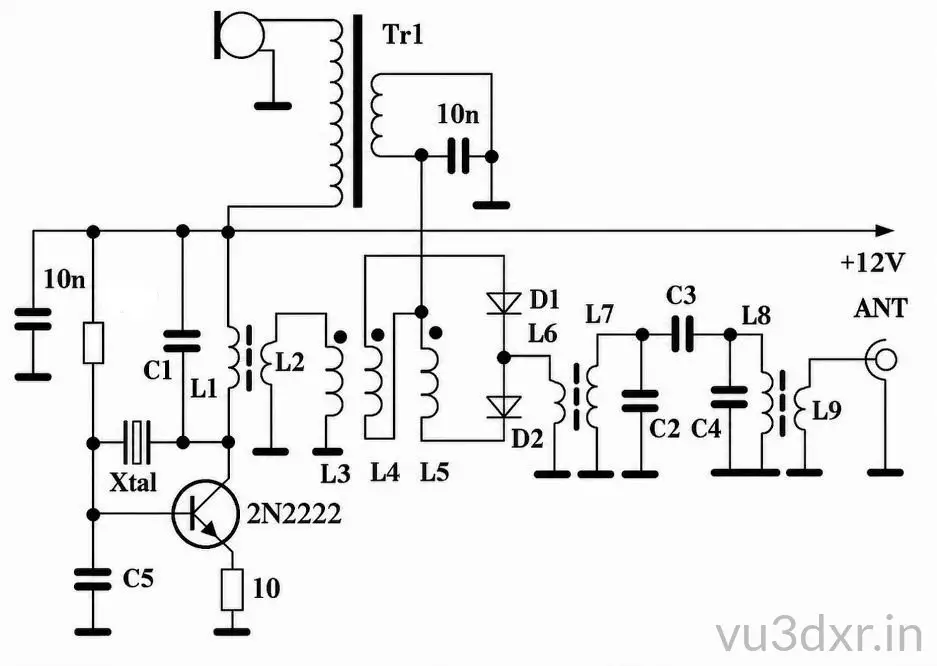
Minimalist RF circuits often teach more than complex modern designs. This small DSB transmitter is a good example. The entire DSB transmitter uses only one active semiconductor device together with a pair of diodes and a few tuned circuits.

At first glance the circuit almost looks too simple to work seriously. Yet it does. When connected to a properly matched antenna, the transmitter can establish contacts with ordinary SSB stations surprisingly well. Most operators on the other end will hardly notice that the signal comes from such a basic setup because the carrier is largely suppressed.

The original concept was published by the well-known experimenter JF1OZL and later reproduced by several European homebrew enthusiasts. Its appeal comes from one thing: simplicity.

DSB Transmitter using 2N2222

Building a Simple 2N2222 DSB Transmitter for Amateur Radio

Thursday, 7 May 2026

ATS Mini Firmware Now Supports LILYGO T-Embed SI4732

ATS Mini Firmware Now Supports LILYGO T-Embed SI4732: ATS Mini firmware v2.34 now includes experimental support for the LILYGO T-Embed SI4732 receiver. Here is what the hardware does, how ATS Mini firmware works,